Digital Integrated Circuits

Introduction

Outline

  • Logistics
  • Coverage
  • Background
  • Rapid Overview
  • Review of Key Concepts

Digital Integrated Circuits

  • Why digital?
  • Robust to conditions, easy to manipulate, repeatable, scalable
  • Computation methods available:
  • Compression, encryption, digital signal processing, digital control
  • Why integrated?
  • Smaller, lower power, cost less, more functionality
  • Integrate GPU / WiFi / cache / memory controllers
  • Intel Core Ultra (Meteor/Lunar Lake class):
  • Disaggregated tiles with Foveros 3D packaging
  • Heterogeneous nodes (Intel + TSMC, 3-4 nm class)
  • Integrated NPU for on-device AI; PCIe 5 + DDR5/LPDDR5X
  • AMD Ryzen AI 300 (Zen 5):
  • Zen 5 CPU + RDNA GPU + XDNA NPU
  • Chiplet ecosystem; 3D V-Cache options in desktop/server
  • Advanced 4 nm class silicon
  • Apple M4:
  • 3 nm class SoC with unified memory
  • Powerful GPU + Neural Engine
  • Tight HW/SW integration across Apple platforms
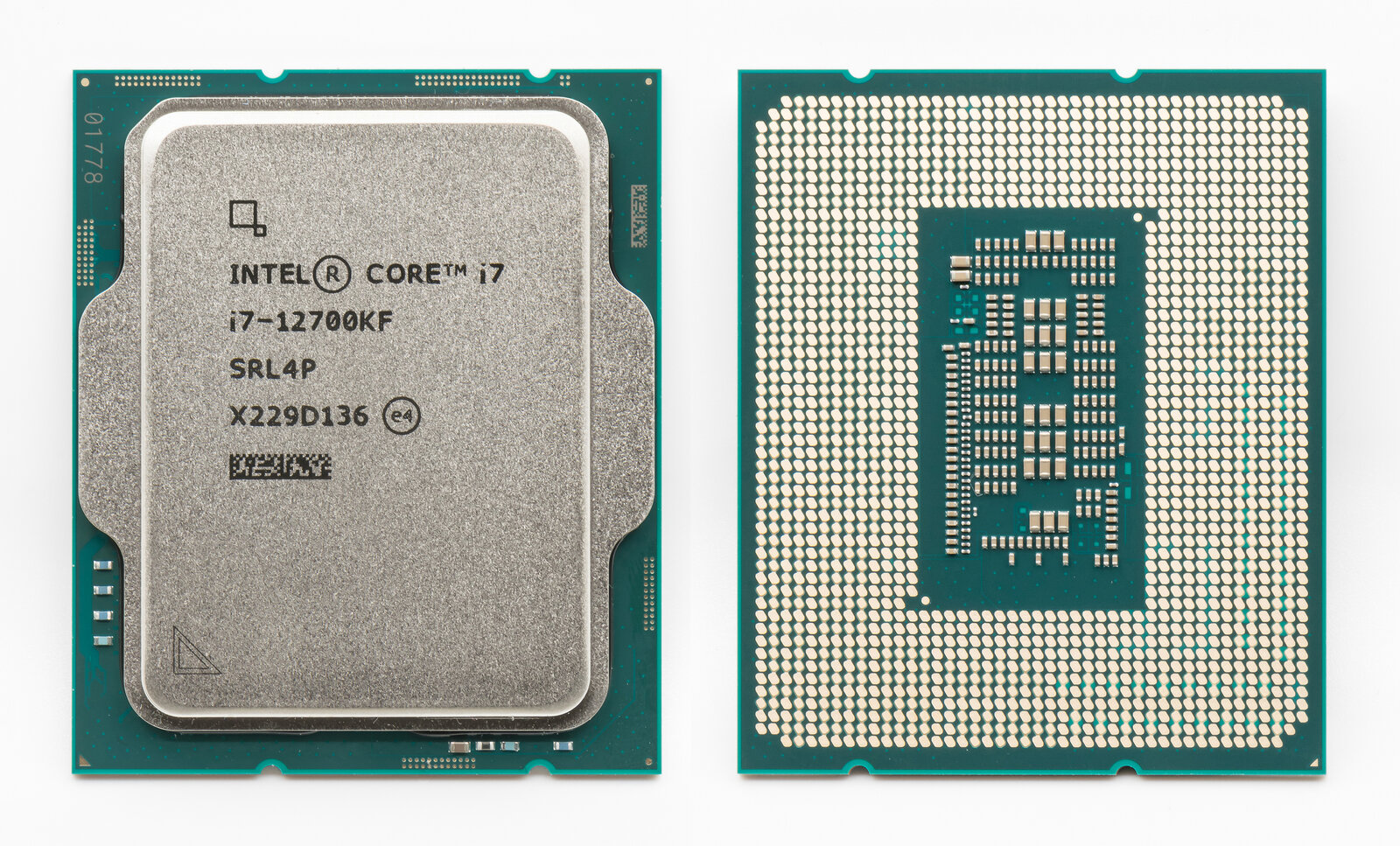
Intel processor package
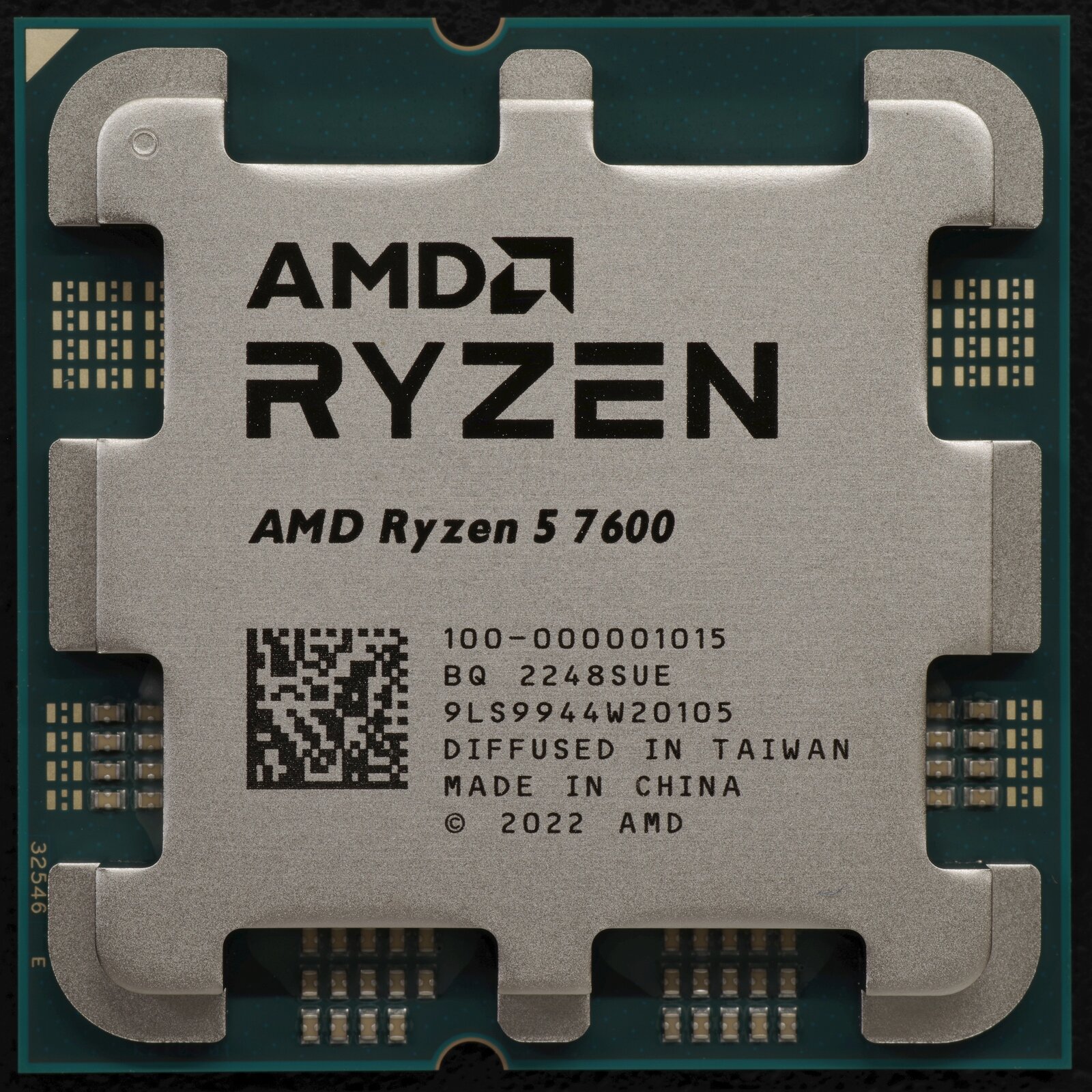
AMD Ryzen processor package
Apple M4 chip badge

Digital Integrated Circuits

  • Explosion of possibility
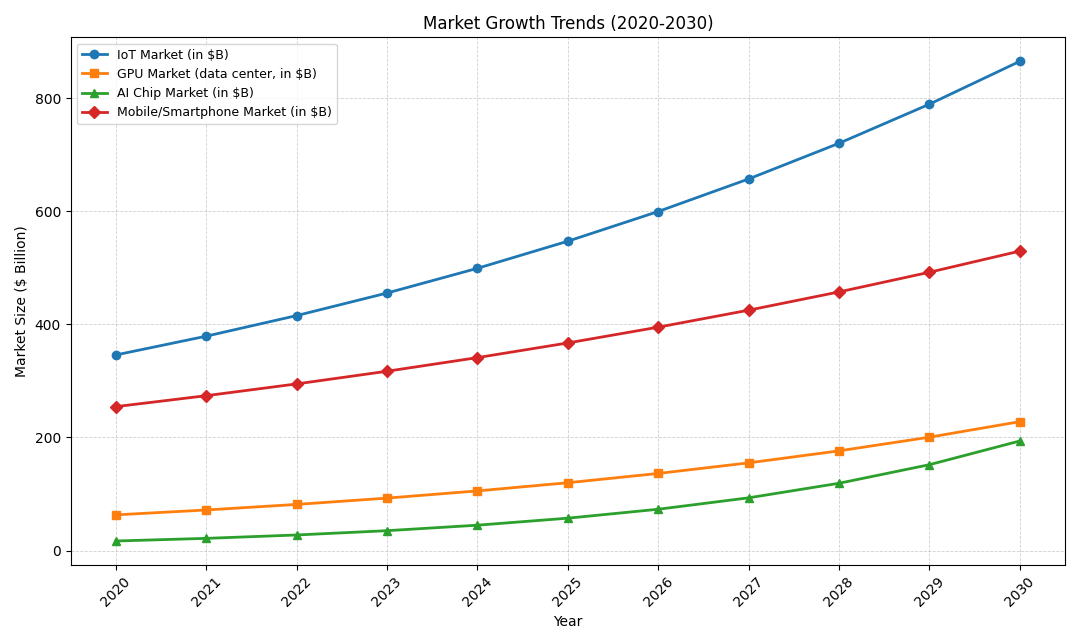
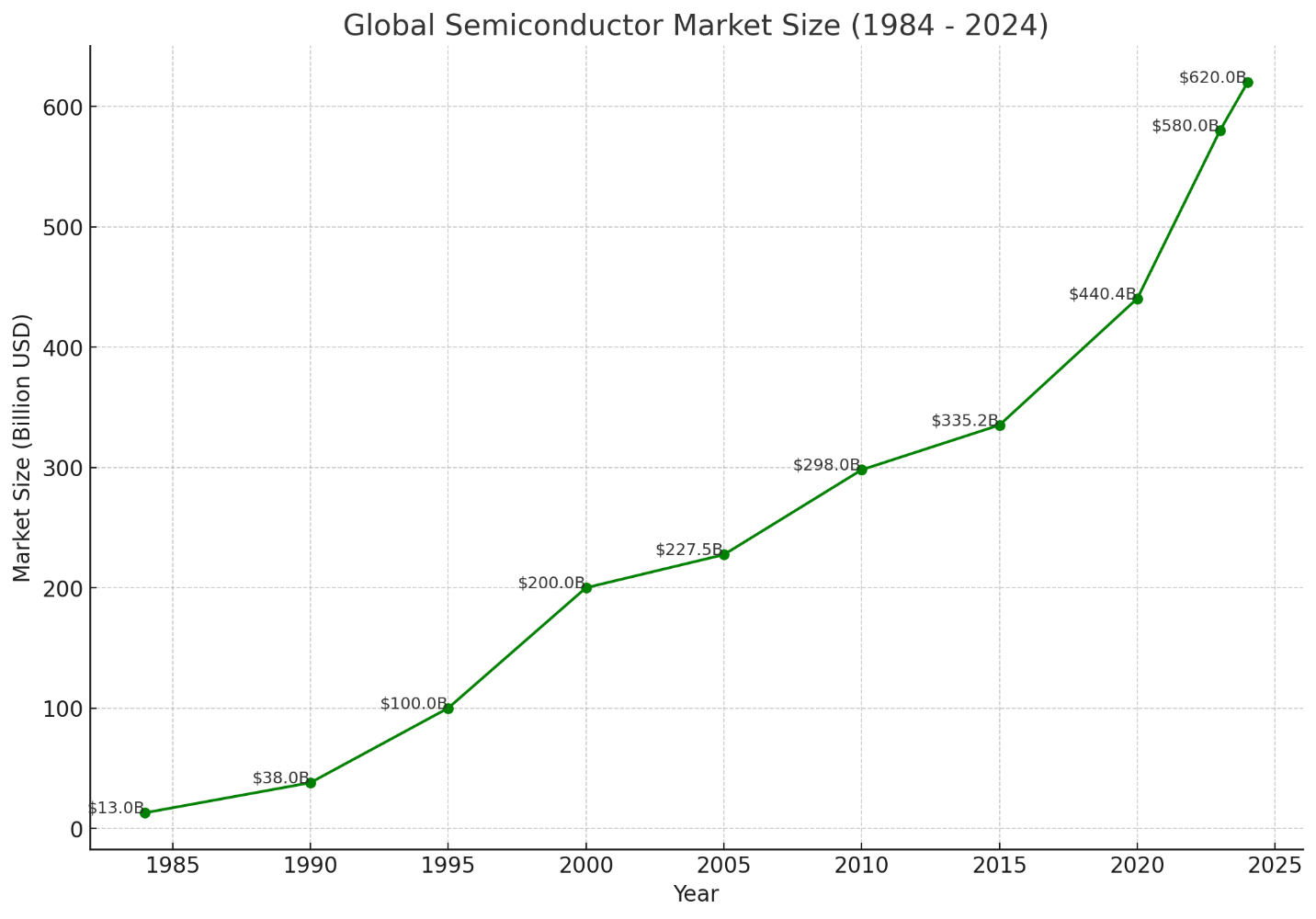
  • IOT: 2030E market size ~= $0.87T
  • GPU (data center): 2030E market size ~= $228B
  • AI chip: 2030E market size ~= $194B
  • Mobile/smartphone: 2030E market size ~= $530B

Estimated projection only

Market growth trends chart (2020-2030)

What is this class all about?

  • Transistor-level digital integrated circuit
  • Device physics
  • Design principles and layout
  • Models and simulation
  • Verification
  • Models allow us to reason about circuit behavior
  • Analyze and optimize circuit performance:
  • Power, cost, performance.
  • Teach you how to make sure your circuit works/performs
  • Do you want your transistor to be the one that renders a 1 billion transistor chip useless?

Topics

  • Complementary Metal Oxide (CMOS) devices
  • Manufacturing Technology
  • Gates
  • Digital Circuits
  • Inverters
  • Combinational and sequential logic
  • Propagation delay
  • Reliability
  • Power
  • Interconnects
  • Modeling and representation
  • Memories

Design Abstraction Levels

  • System: e.g., Processor
  • Module: e.g., MUX
  • Gate: e.g., NAND
  • Circuit: e.g., inverter
  • Device: e.g., transistor layers

Class Organization, Style

  • Before class: read material
  • Class: Interactive lecture and/or problems
  • Participation is important
  • Lab assignment: Individual, guide-like
  • Need to sign NDA
  • Design project: Group of 2/3
  • Exams: Online midterm and final
  • Examine your self improvement, proficiency

Some Important Announcements

  • Course messaging via Canvas announcements and email
  • Use email for private questions or exam questions
  • Use office hours or in-class Q&A for general questions
  • You are encouraged to work together on your homework and lab assignments
  • But you must turn in your own solution based on your understanding
  • You must not copy each others’ assignments
  • Engineering Honor Code

Class Style

  • Active learning drives retention: discussion, practice, and teaching others matter.
  • We will mix short lecture segments with demos, problems, and peer discussion.
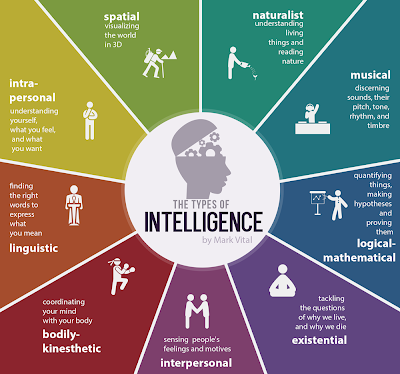
  • Students learn differently (visual/spatial, logical, verbal, interpersonal, etc.).
  • The course balances learning styles: sensory/intuitive, visual/verbal, active/reflective, sequential/global.
  • Ask questions in class; use office hours or email for follow-ups.
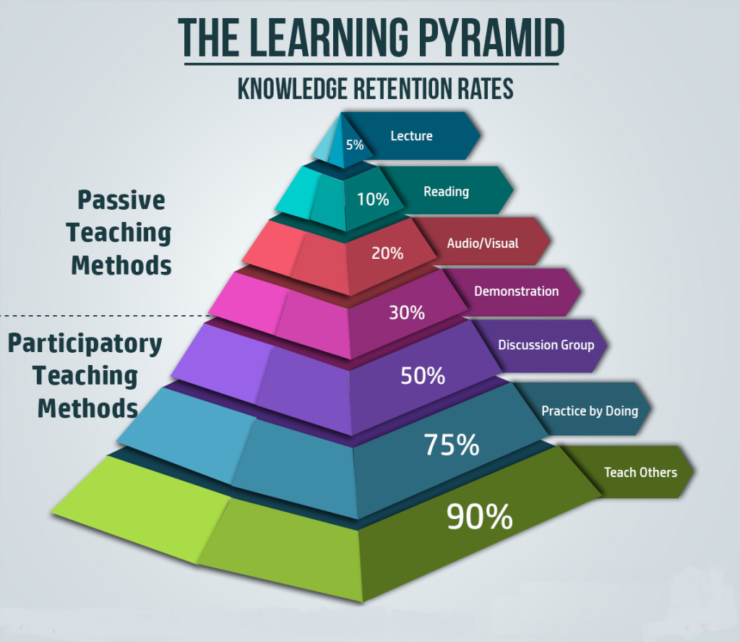
Learning pyramid and retention rates
Multiple intelligences wheel

Class Material

  • Textbook: “Digital Integrated Circuits – A Design Perspective”, 2nd Edition, by J. Rabaey, A. Chandrakasan, B. Nikolic
  • Reading assignments will be given for each lecture
  • Assignments will be posted on canvas

Software

  • Cadence
  • Widely used in industry
  • Online tutorials and documents
  • SPICE for simulation
  • pyspice with ngspice
  • xyce (Sandia National Labs, possibly harder to install)

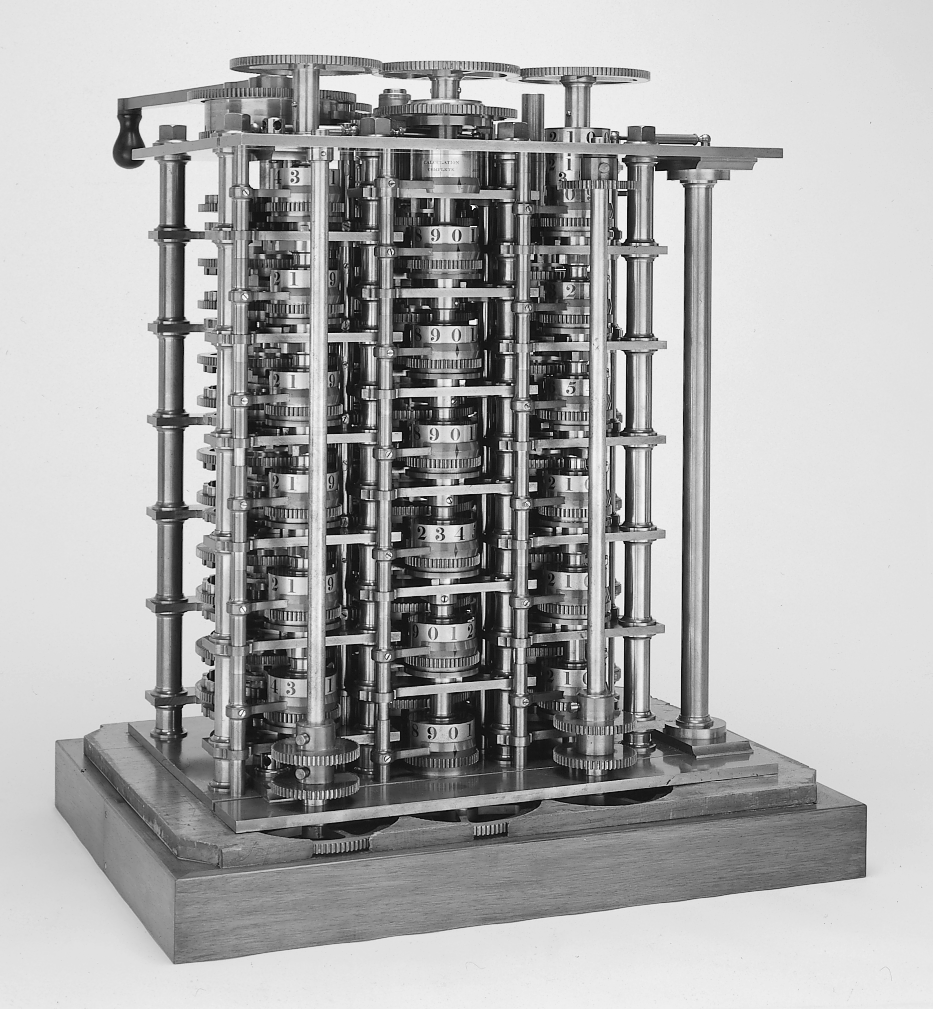
The First Computer

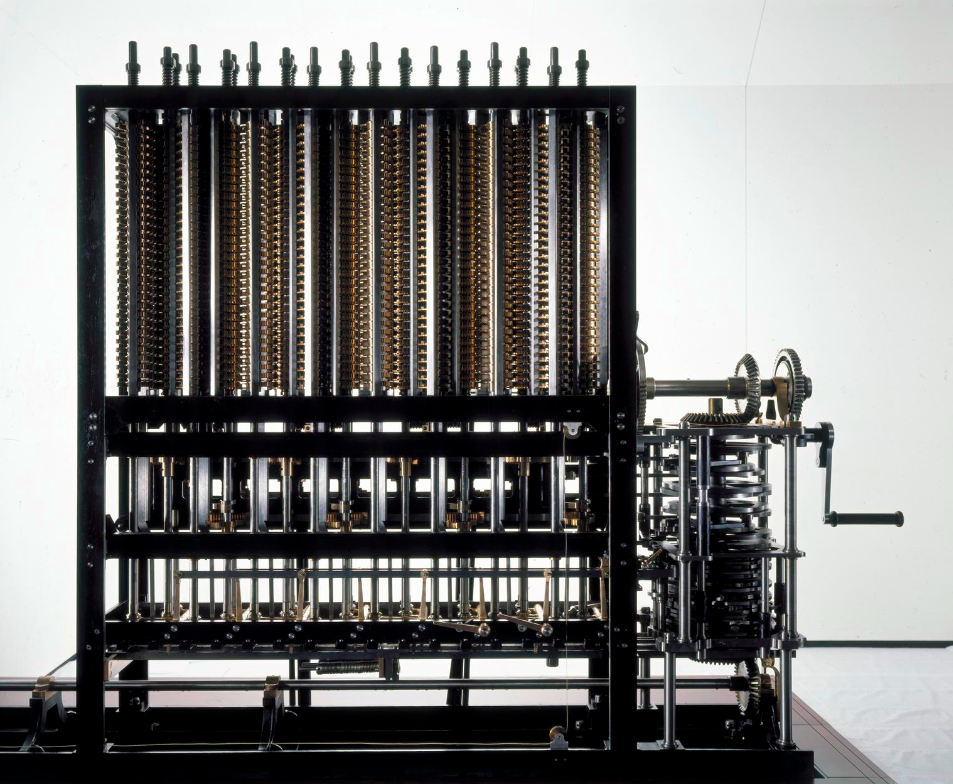
  • Babbage Difference Engine
  • Year: 1832
  • # Parts: 25,000
  • Cost: ~$2.5M (today)
Slide 15 image

Babbage Difference Engine

Slide 16 image

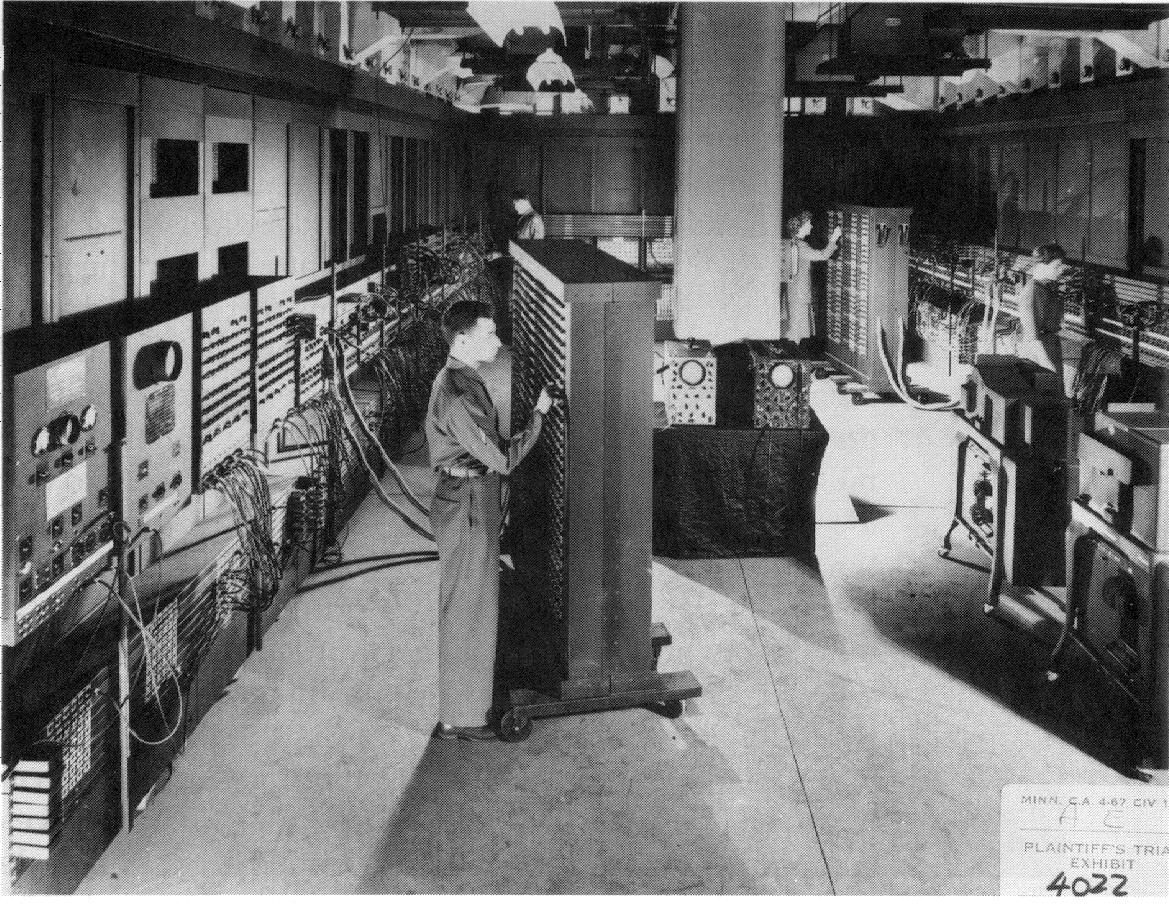
ENIAC - The first electronic computer (1946)
Slide 17 image

The Transistor Revolution

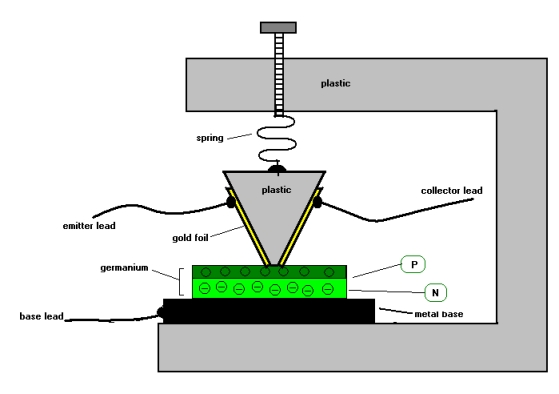
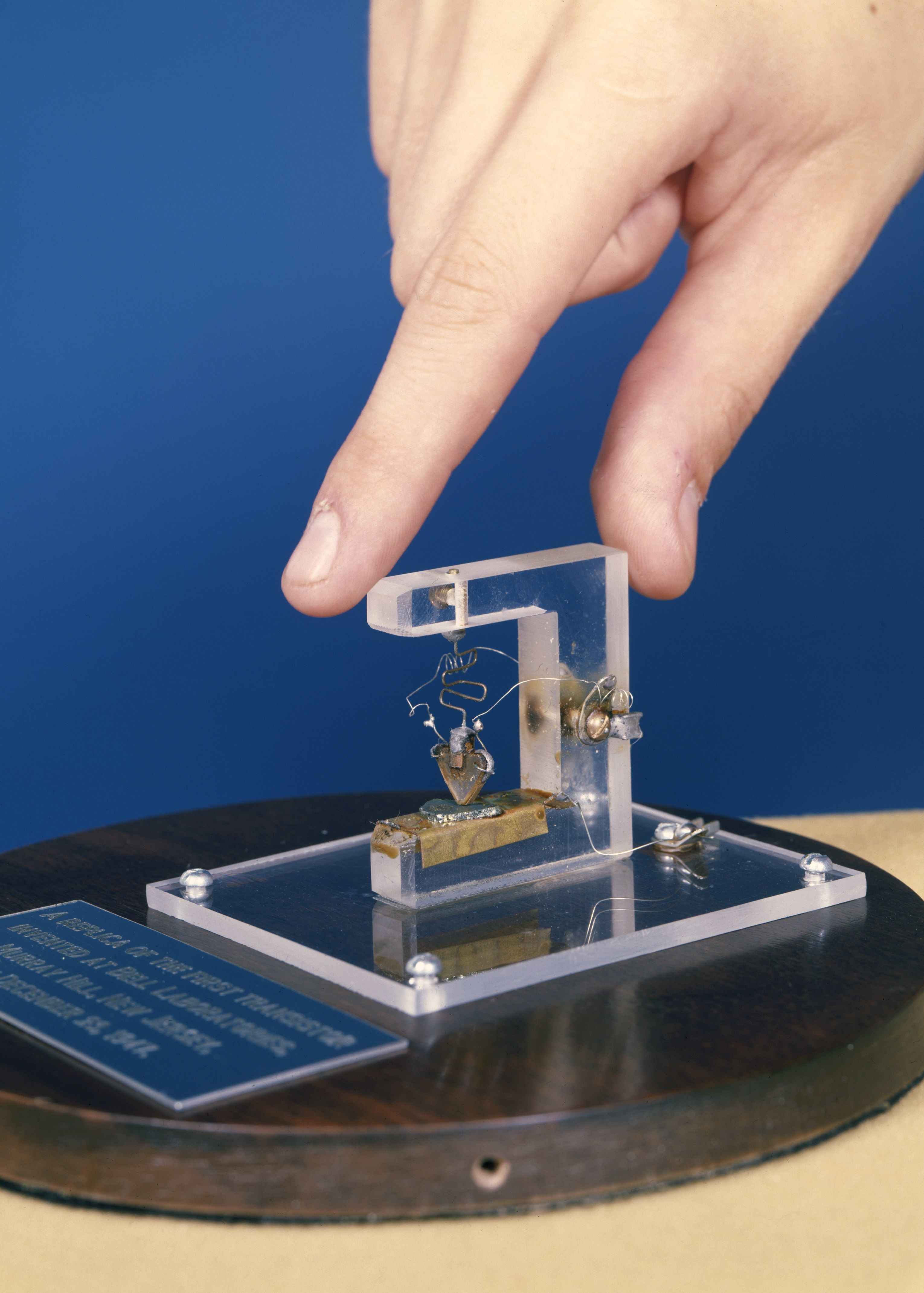
  • First transistor (point-contact)
  • John Bardeen and Walter Brattain
  • Bell Labs, 1947
  • Nobel Prize in Physics (1956)
  • William Shockley, John Bardeen, Walter Brattain
  • For their research on semiconductors and the discovery of the transistor effect
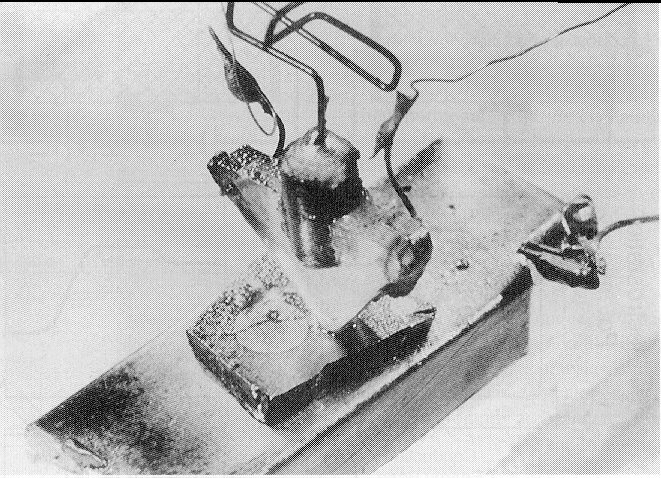
Point-contact transistor
Bardeen and Brattain with early transistor apparatus

First Transistor Showing Scale

Slide 20 image

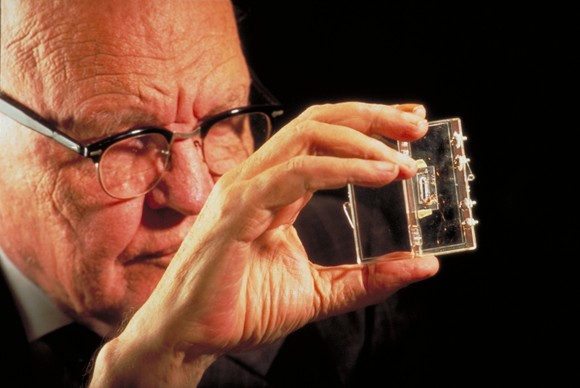
The First Integrated Circuit

  • Jack Kilby (Texas Instruments, 1958)

“a body of semiconductor material ... wherein all the components of the electronic circuit are completely integrated”

  • Nobel Prize in Physics (2000)
  • Jack Kilby (1/2) – the invention of the integrated circuit
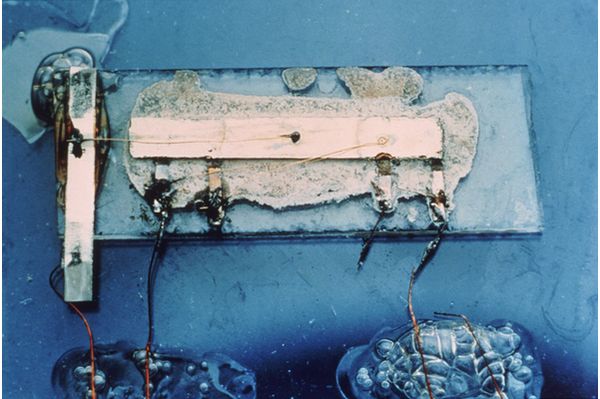
Early integrated circuit prototype

First IC (showing scale)

Slide 22 image

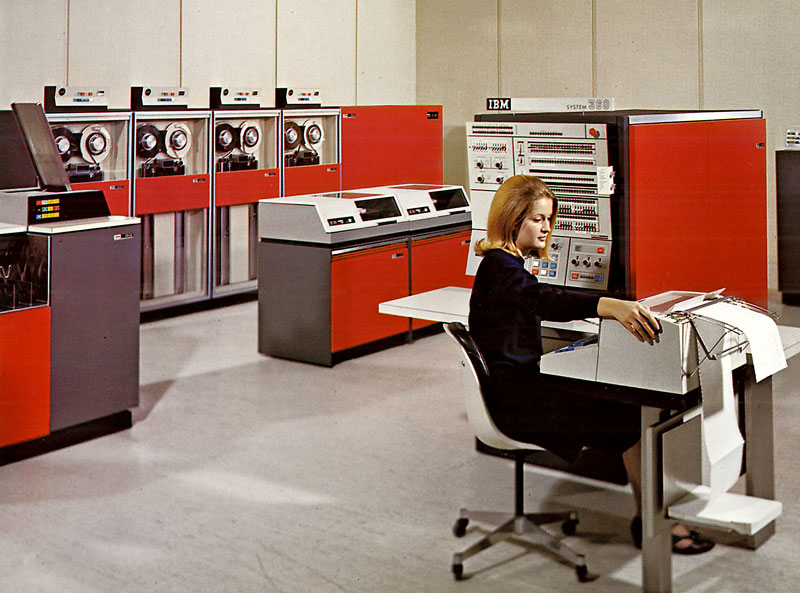
First Commercially Successful Computer

  • IBM System/360 (1964)
  • First truly compatible family of mainframes across performance tiers
  • Standardized 8-bit byte, ISA, and I/O ecosystem
  • Massive investment (~$5B) paid off with rapid adoption
  • By 1969, IBM was shipping >1,000 System/360 systems/month
  • DEC PDP-8 (1965)
  • First commercially successful minicomputer
  • Low price (~$18,500) and compact size opened new markets
  • 50,000+ units sold
IBM System/360 installation

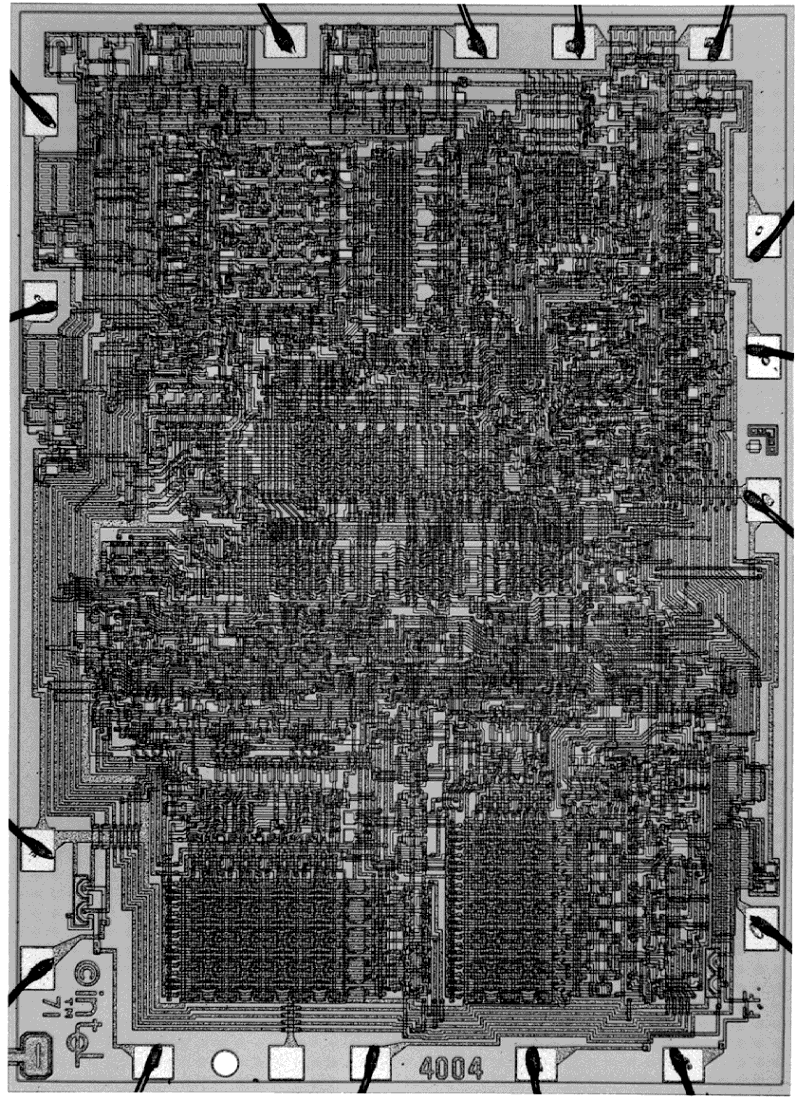
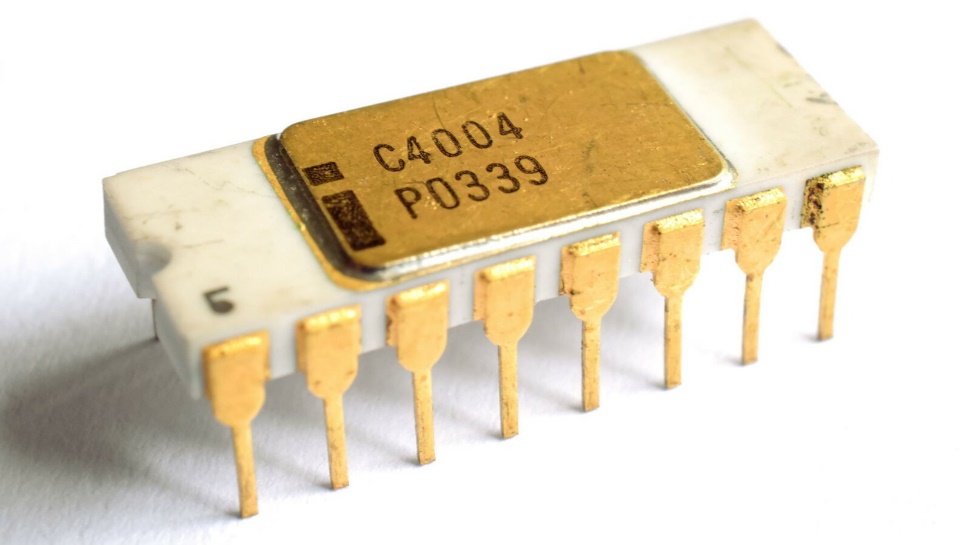
Intel 4004 Micro-Processor

  • 1971
  • 2,300 transistors
  • 10um technology
  • ~3 mm x 4 mm
  • 108 KHz operation
  • Same computing power as ENIAC
Slide 24 image
Slide 24 image

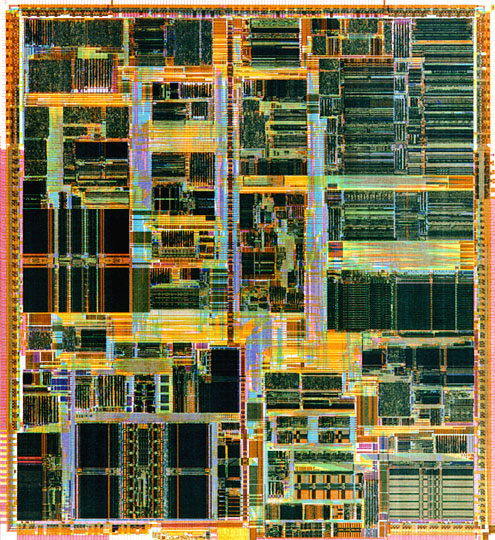
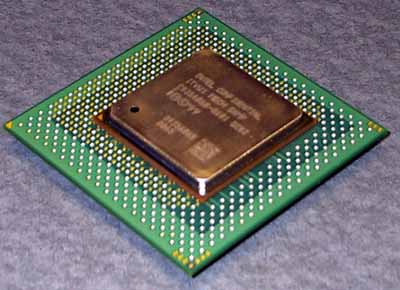
Intel Pentium 4 Microprocessor

  • 2000
  • 42,000,000 transistors
  • 0.18um technology
  • 1.5 GHz operation
Slide 25 image
Slide 25 image

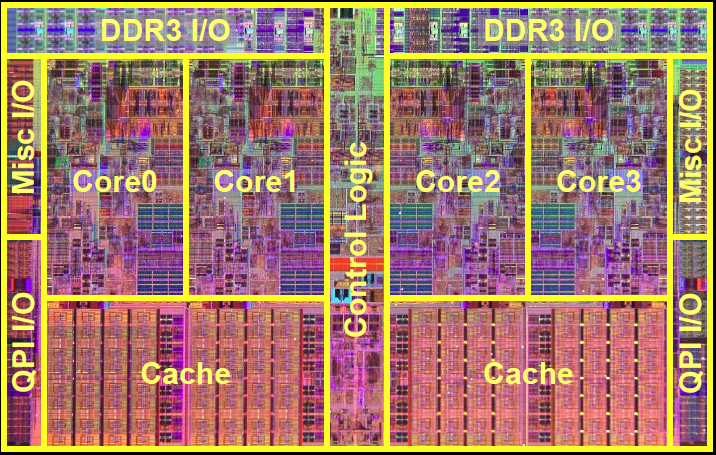
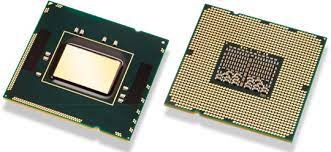
Intel Nehalem Microprocessor (2009)

  • 731,000,000 transistors
  • 3.6 GHz frequency
  • 45nm technology
  • 4 cores, 8 MB cache
Slide 26 image
Slide 26 image

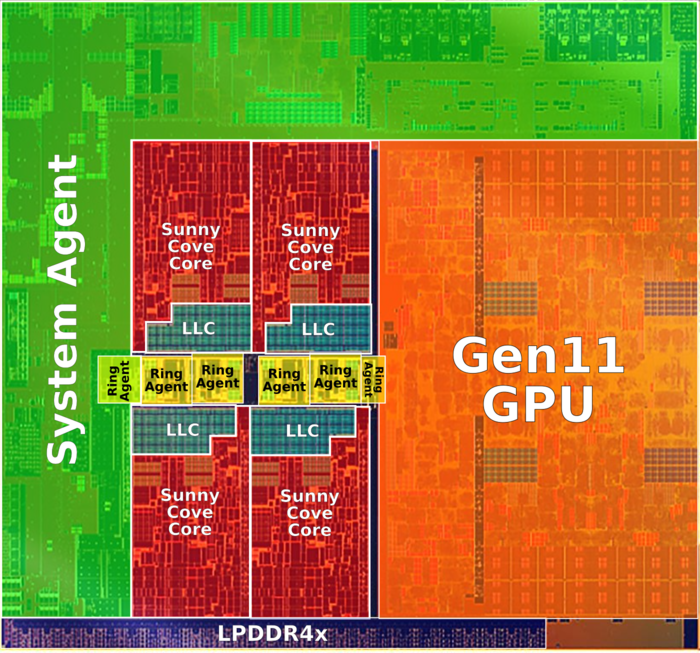
Icelake Microprocessor (2019)

  • Process: 65nm LP CMOS
  • Size: 11.44x10.75 mm
  • Supply voltage: 1.2V
  • Freq: 3.6 GHz+ (CPU)
  • Power: 28 W TDP
Slide 27 image

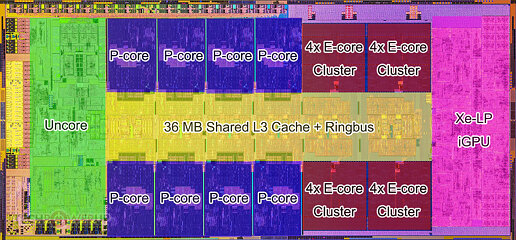
Raptor Lake (2022)

Raptor cove and gracemont cores
Slide 28 image

Raptor Lake Refresh vs AMD Ryzen 9000

AMD Ryzen 9 9950X (Zen 5) vs Intel Core i9-14900K (Raptor Lake Refresh)
AMD Ryzen 9 9950X Intel Core i9-14900K
Release Date Aug 15, 2024 Oct 17, 2023
Node / Design 4 nm Intel 7 (10 nm)
Cores / Threads 16 Cores / 32 Threads 8P + 16E | 24 Cores / 32 Threads
Peak Clocks Up to 5.7 GHz Up to 6.0 GHz
TDP / PBP / MTP 170W TDP 125W PBP / 253W MTP (TDP 125W)
Memory DDR5 DDR4-3200 / DDR5-5600
PCIe PCIe 5.0 - 24 lanes (CPU) PCIe 5.0 - 16 lanes (CPU)

TDP: thermal design power. PBP: processor base power. MTP: max turbo power (Intel).

Apple M2 (from Wikipedia)

  • Again specialization is occurring
  • 4 (performance)+4 (energy efficient)
  • 5nm (TSMC)
  • 20+ Billion transistors
  • GPU on-chip
  • Dedicated neural network chip: 16-core
  • 15.8 trillion operations

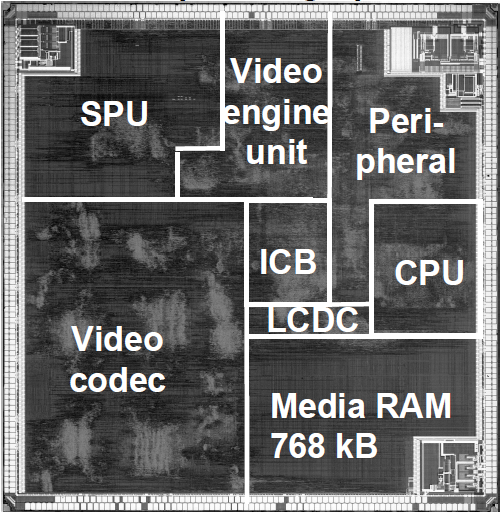
A Cell Phone Media Application Processor Chip (2009)

  • Process: 65nm LP CMOS
  • Size: 6.4x6.5 mm
  • Supply voltage: 1.2V
  • Freq: 500MHz (CPU)
  • 166MHz (IPs)
  • Power: 342mW H.264 dec
  • 443mW H.264 enc

Courtesy, Renesas

Slide 31 image

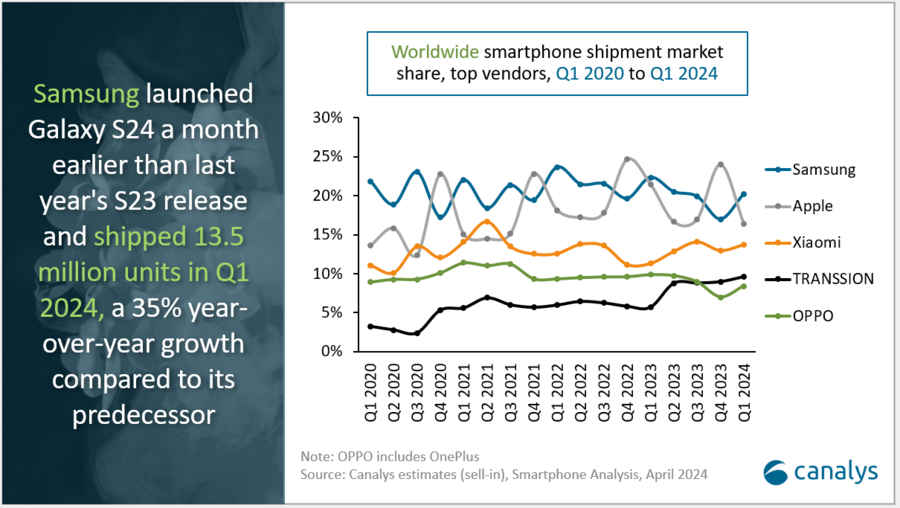
Apple A17 Pro (3nm), Qualcomm Snapdragon 8 Gen 3 (4nm), Samsung Exynos 2400 (4nm)

  • MediaTek Dimensity 9300 plus
  • Current leader (Taiwanese company)
  • Depending how you measure
  • Released in China, Vivo and Xiaomi
  • Generative AI support
  • Numerous comparison sites, but note:
  • Specialization allows some processors to be better at specific tasks: e.g., gaming or low power.
  • 8+ cores, but specializing now as well
  • Heavy AI core development
  • 12B+ transistors

“Ostrich” effect

Don’t fall for it

Slide 33 image

Markets

Slide 34 image

427 Stuff – Lookahead at possibilities

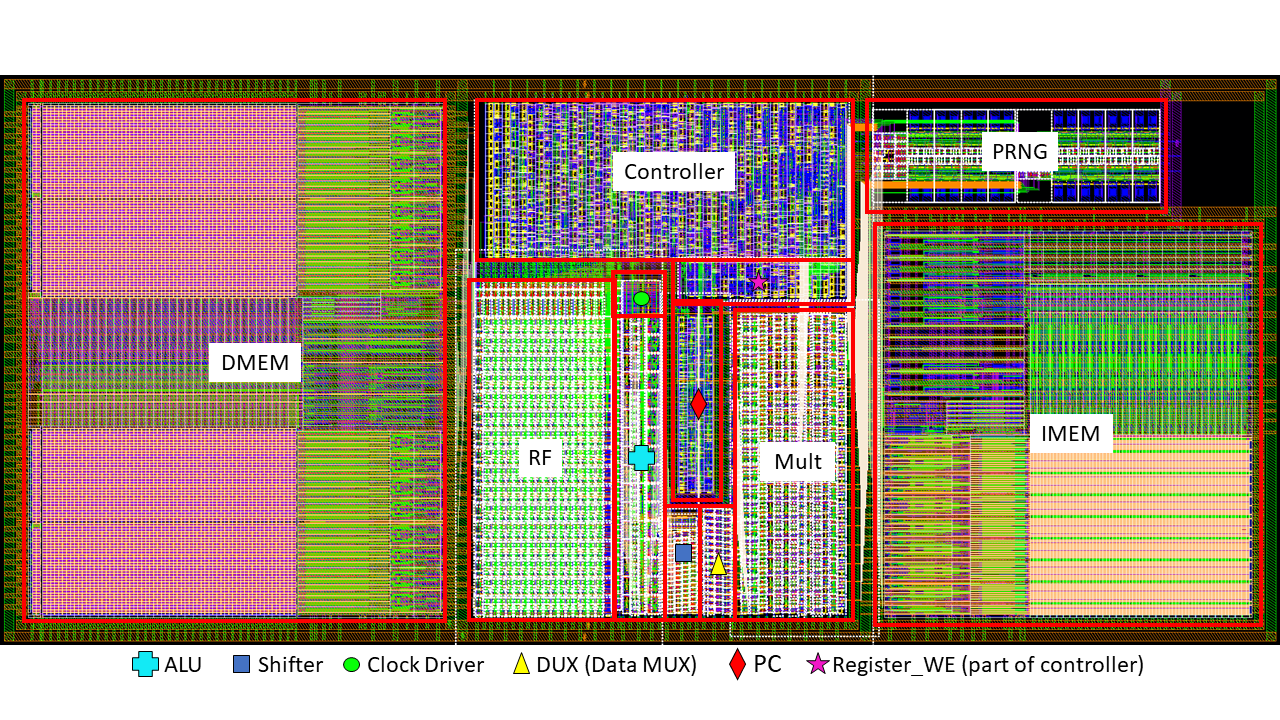
  • Process: 65nm CMOS
  • Supply voltage under 1.2V
  • Freq above 333 MHz
  • Design of layout and floorplan to optimize for area and speed, for the most part
Slide 35 image

Mobile Internet of Things

Slide 36 image

Moore’s Law

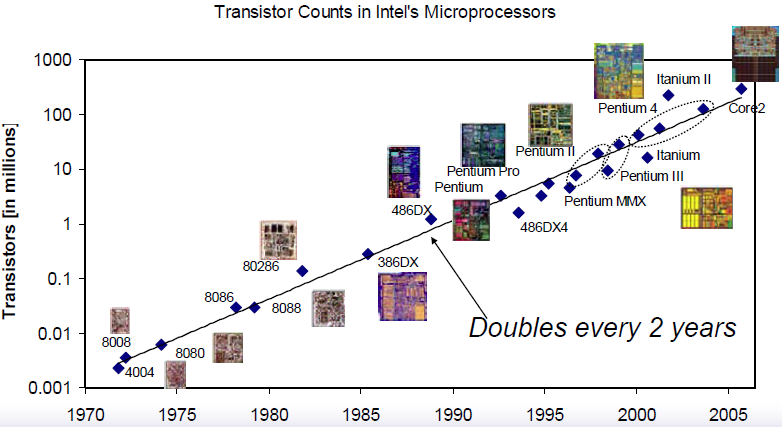
  • Gordon Moore (1965): transistor counts double about every 1–2 years
  • Revised to ~2 years by 1975
  • Where it slowed
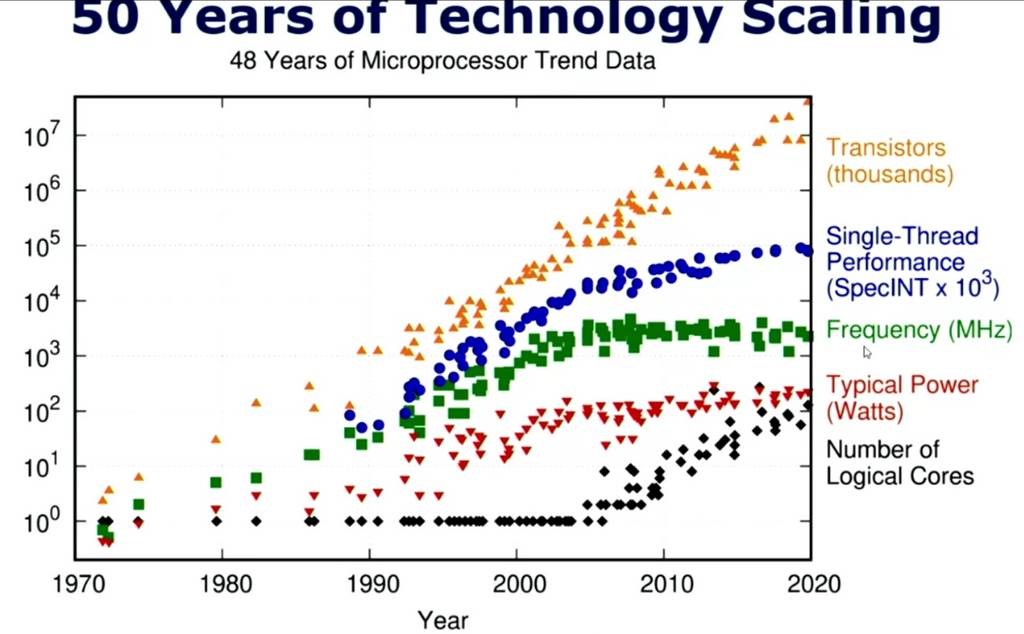
  • ~2005: Dennard scaling ended; clock rates stopped rising quickly
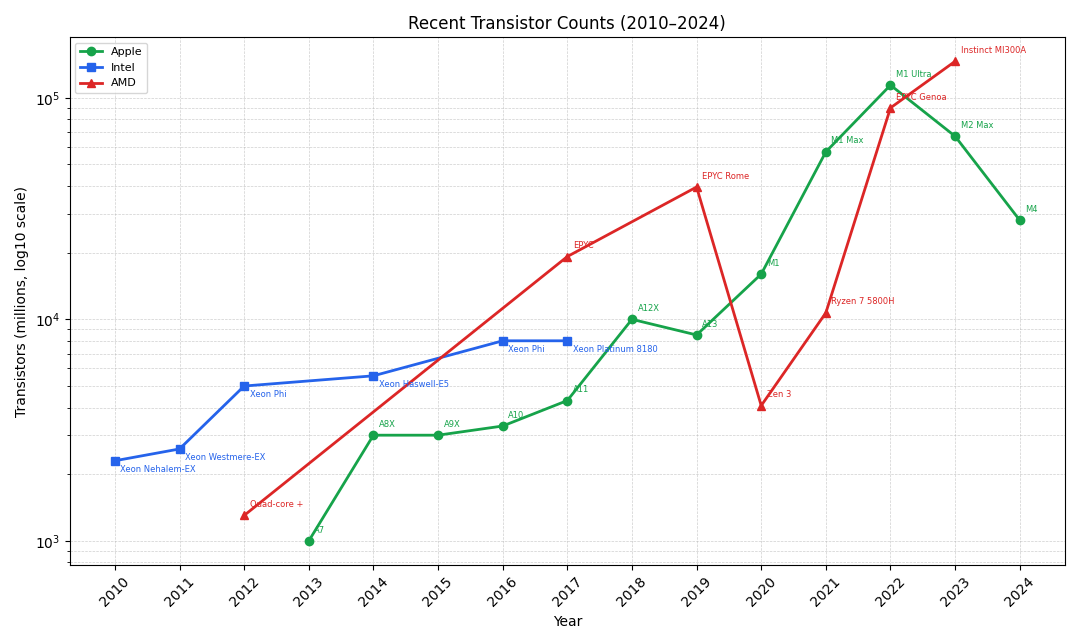
  • 2010s–2020s: doubling slowed to ~2.5–3+ years; costs rose sharply
  • Progress continues via chiplets, 3D stacking, and specialization
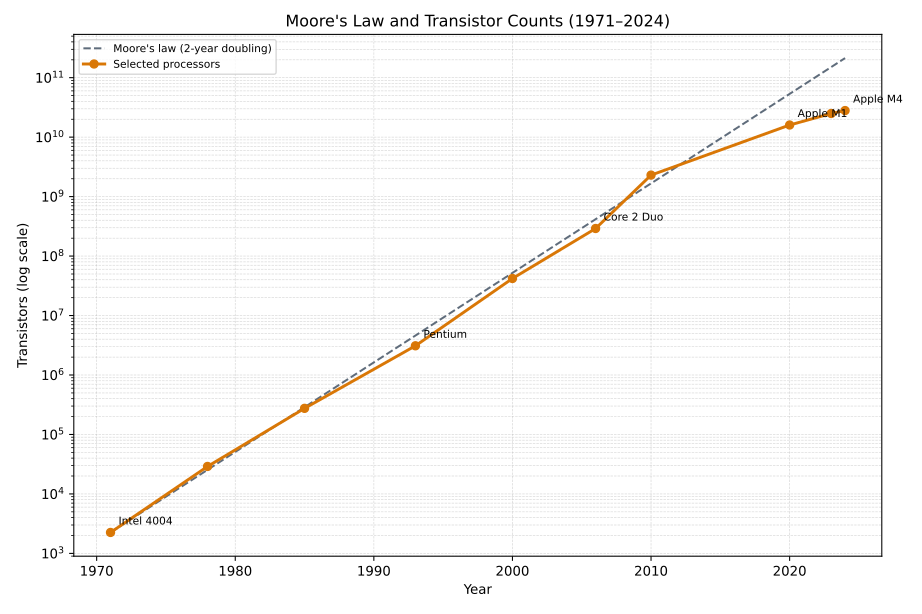
Moore's law plot with updated transistor counts (1971-2024)

Transistor Counts (Historical)

Slide 38 image

Transistor Counts (Recent)

Recent transistor counts by vendor (2010-2024, log10 scale)

Moore’s Law Changes

  • Upper limit on speed caused changes
  • Now more cores
  • Hybrid cores (performance vs energy efficient)
  • Continue to scale down sizes
  • Just now increasing speeds up above 5 GHz
Slide 39 image

Growth Rate

  • 53% compound annual growth over 50 years
  • No other technology has grown so fast so long
  • Driven by miniaturization of transistors
  • Smaller is cheaper, faster, lower in power!
  • Revolutionary effects on society
  • [Moore65]
  • Electronics Magazine
Slide 40 image

Annual Sales (Estimated)

Slide 41 image

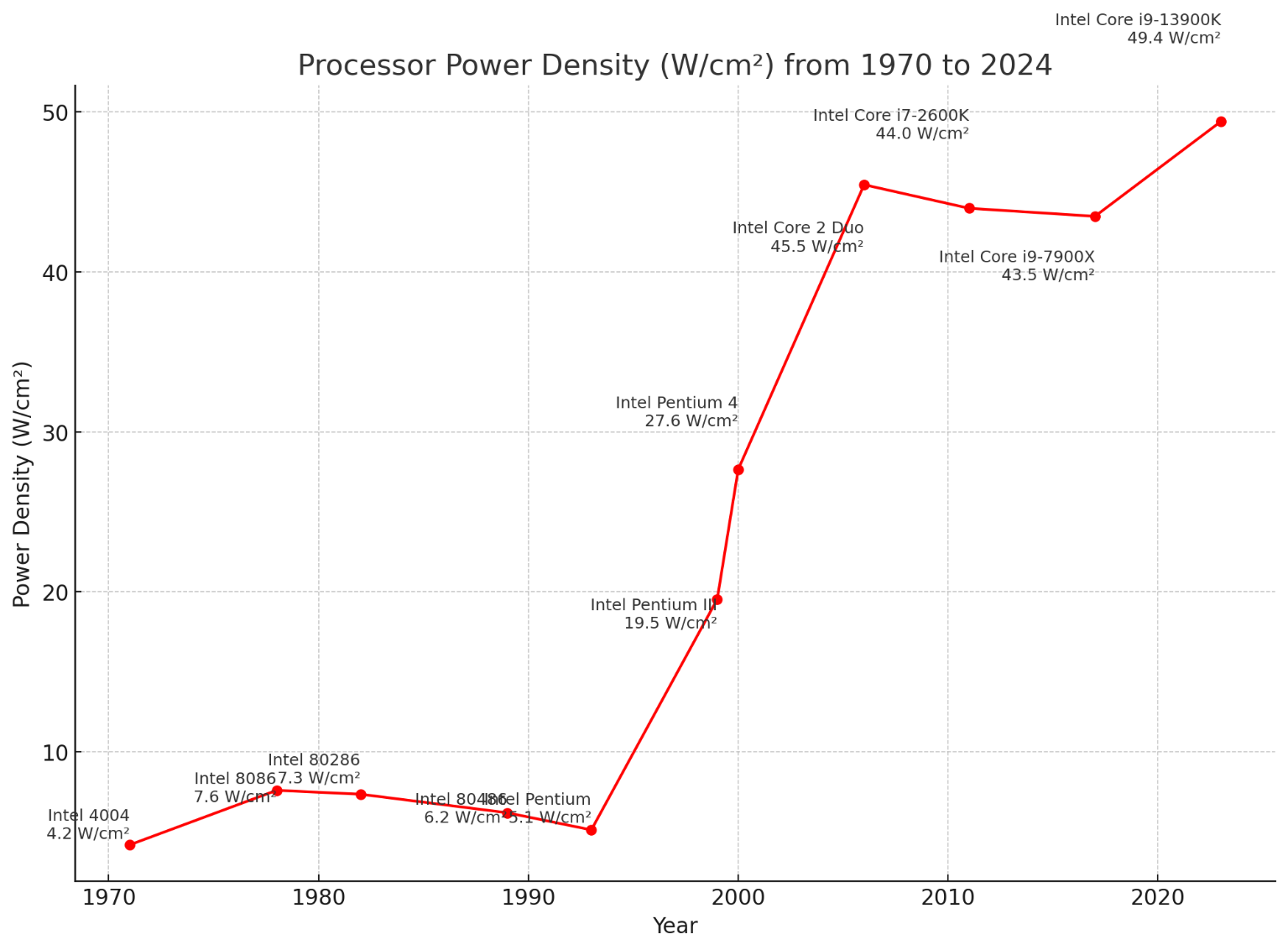
Power Density

  • Power density grew faster than cooling capacity
  • Hard to keep transistor junctions at safe temperature
  • What happens when junctions heat up?
  • Leakage rises rapidly → more power, potential thermal runaway
  • Carrier mobility drops → slower devices, timing margin loss
  • Accelerated aging (electromigration, BTI) → reduced reliability
  • Primary thermal sources in processors
  • Dynamic switching power (C·V²·f)
  • Leakage power (subthreshold, gate, junction)
  • Short-circuit power during transitions + clock/IO fabric

Courtesy, Intel

Not Enough Cooling

Not Enough Cooling

Overclocking: 9.1 GHz Record

Result: power density topped off
Slide 45 image

2023-2025 Power Density (Estimated)

Power density = power / die area (W/cm^2).

Chip Year Power Basis Die Area Power Density
Intel Core i9-14900K 2023 125 W PBP 257 mm^2 48.6 W/cm^2
AMD Ryzen 9 9950X 2024 170 W TDP 2x70.6 mm^2 (CCD) 120.4 W/cm^2
Apple M4 2024 9 W TDP ~130 mm^2 (est.) 6.9 W/cm^2 (est.)

AMD area is CCD-only (I/O die excluded). Apple M4 die size estimated from 28B transistors and TSMC N3E density (216 MTr/mm^2).

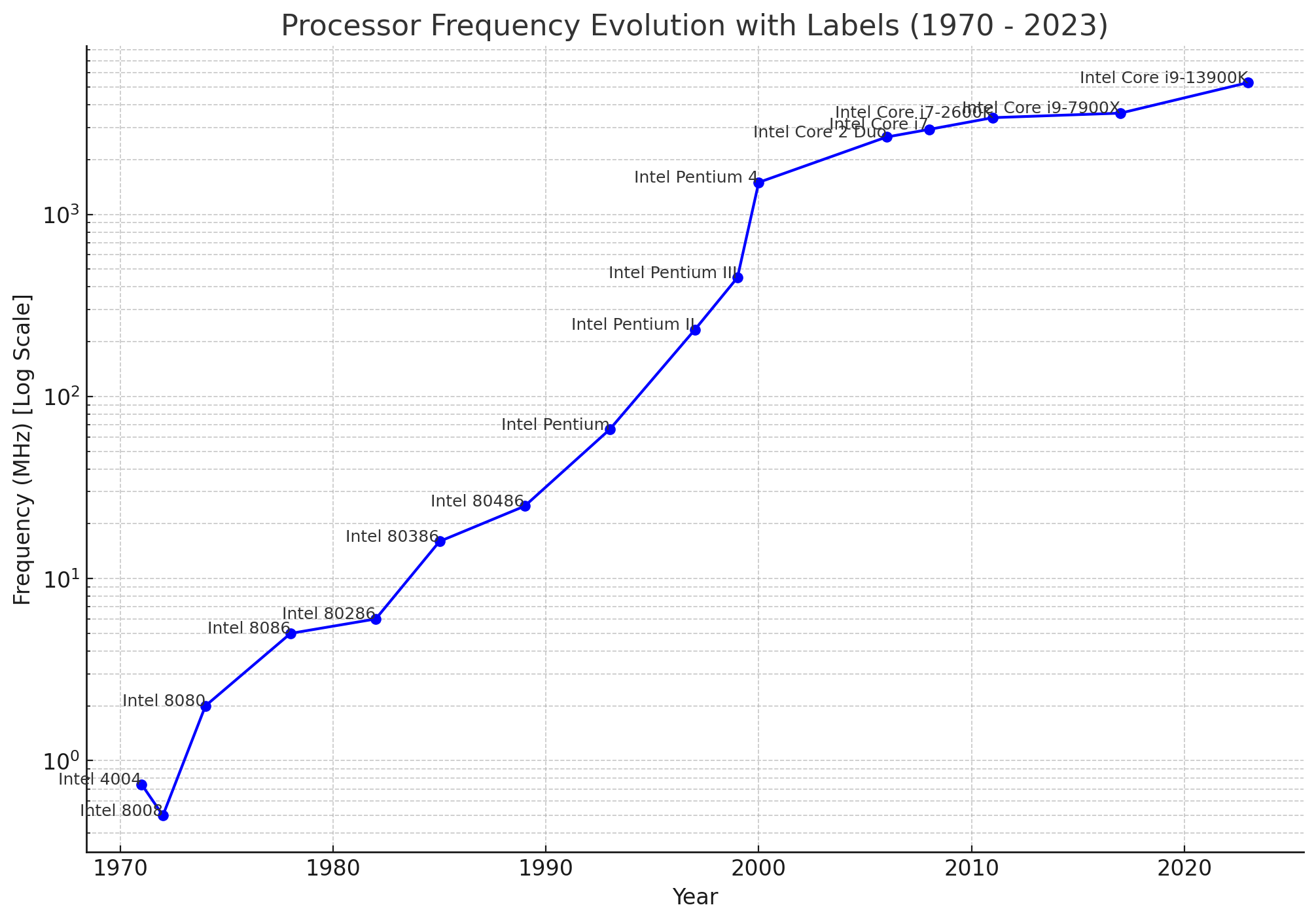
Frequency (Intel)

Slide 46 image

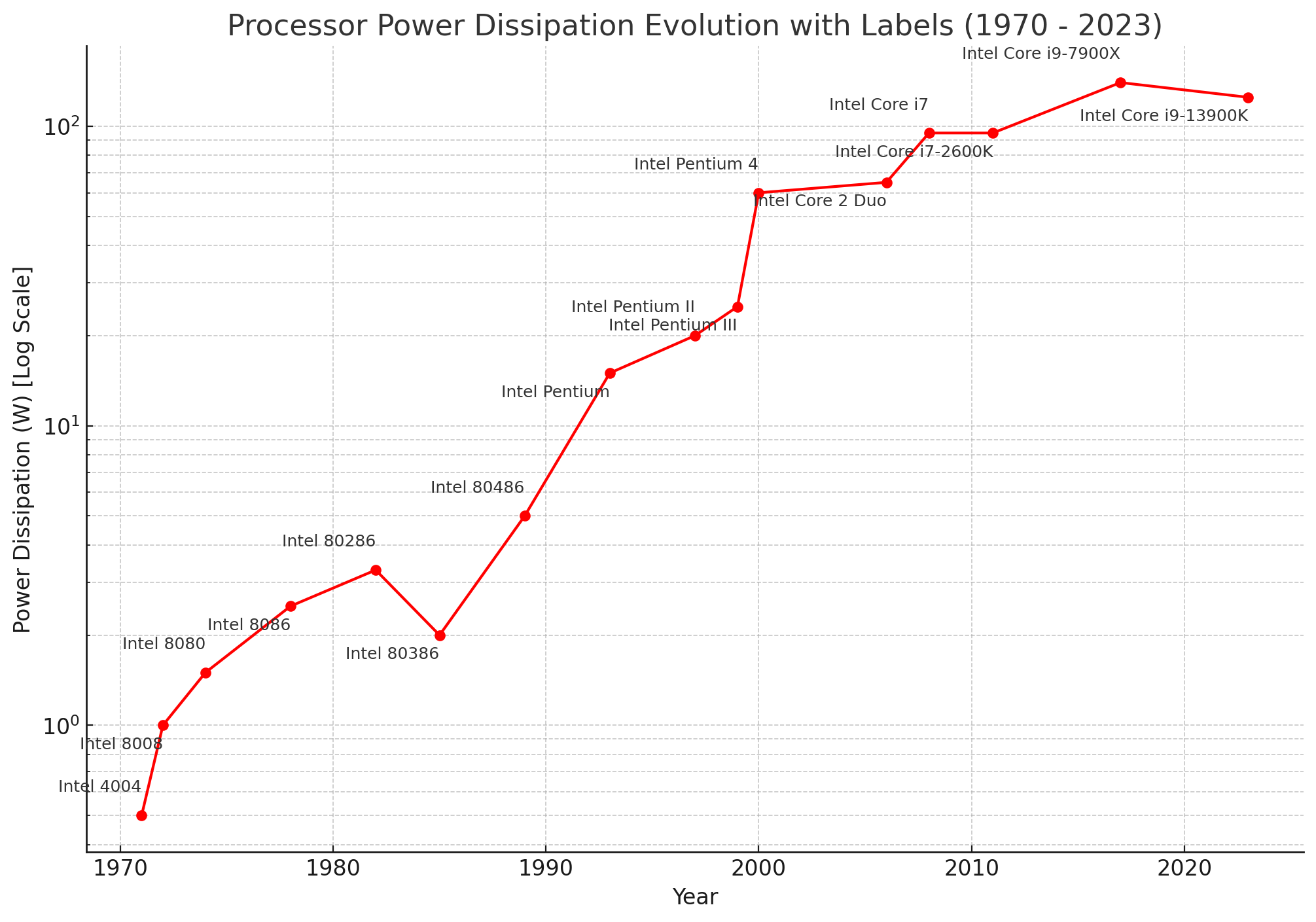
Power Dissipation (Intel)

Slide 47 image

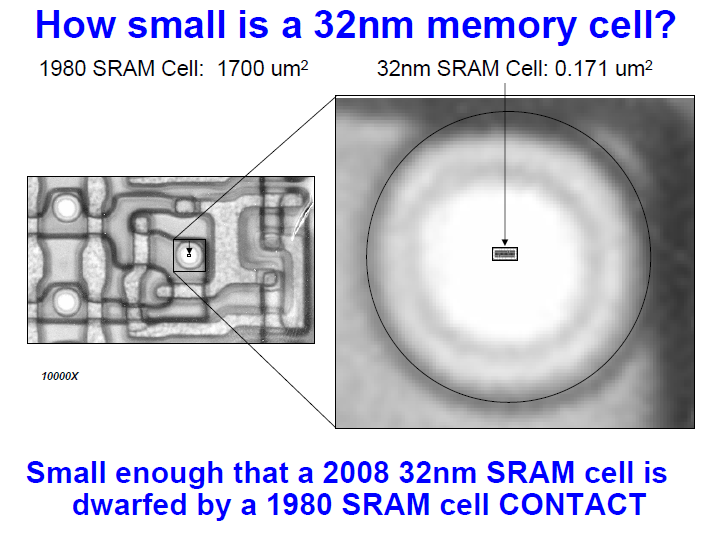
How Small Is a 32nm Memory Cell?

Slide 48 image

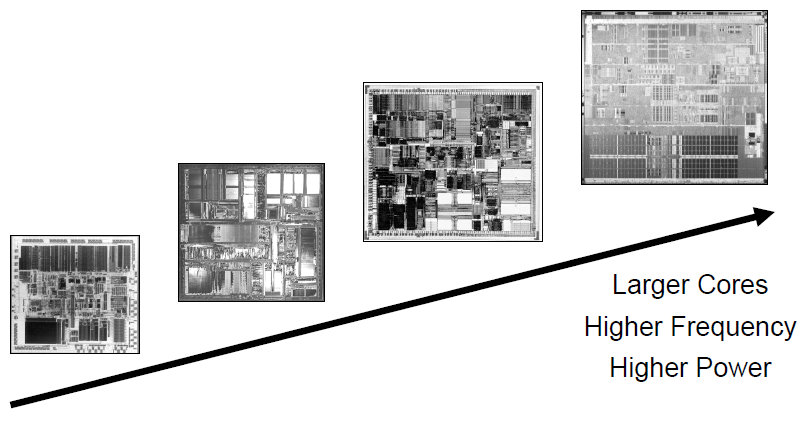
The Old Era of Scaling

It has served us well for >30 years

Courtesy, Mark Bohr, Intel
Slide 49 image

The New Era of Scaling

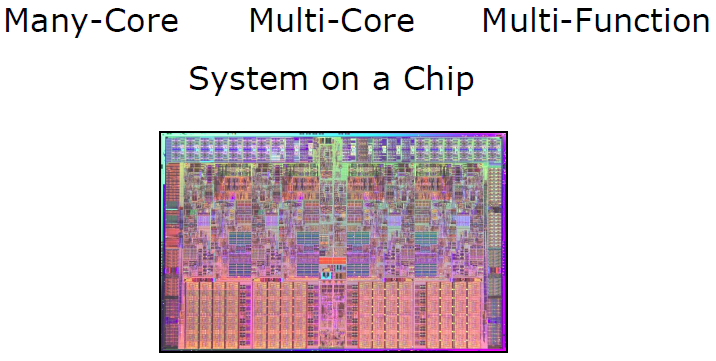
Avoiding the power wall requires a systematic approach from process technology through circuit design to micro-architecture to deliver products with power efficient performance

Courtesy, Mark Bohr, Intel
Slide 50 image

Huang’s Law?

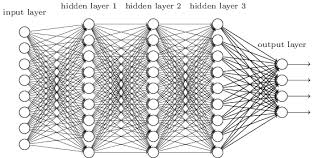
  • Time to train AlexNet image classification deep neural network reduced by 500x (from 6 days to 18 mins) on GPU in last 5 years
  • Recent explosive growth in deep learning is enabled by HW innovation (along with availability of big data)
  • VLSI circuit and architecture techniques
  • More important as end of Moore’s law is approaching
  • Course covers fundamentals to enable VLSI circuit and architecture innovation
Slide 51 image
Slide 51 image

Bell’s Law: Birth of Computer Classes

  • Gordon Bell (1971; updated 2008): new computer class appears ~every decade
  • Trigger: cost/performance crosses a threshold + new applications emerge
  • Older classes persist but shift to infrastructure or niche roles
  • Typical sequence
  • Mainframe → Minicomputer → Workstation → PC → Laptop → Smartphone/Tablet → IoT/Edge
Timeline of computer classes by decade

Bell’s Law: Corollary – 100x Smaller

  • Each new class is ~100x smaller and cheaper over ~10 years
  • Form factors evolve: room → desk → lap → pocket → embedded
  • Shrinking size enables power efficiency and new usage patterns
Log-scale size trend for computer classes over time

Bell’s Law: Corollary – Ubiquity

  • As size/cost drop, device count rises
  • 1 per enterprise → 1 per engineer → 1 per person → many per person
  • Today: multiple personal devices plus embedded sensors everywhere
  • IoT/edge compute is the newest class riding this trend
Mainframe-era computing system
Mainframe
Minicomputer-era system
Minicomputer
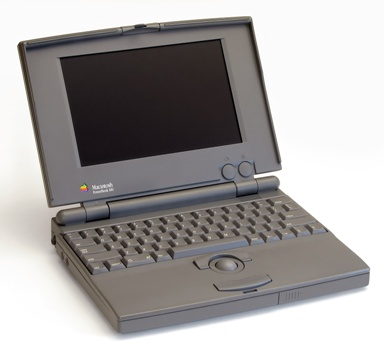
Laptop computer
Laptop
Smartphone
Smartphone
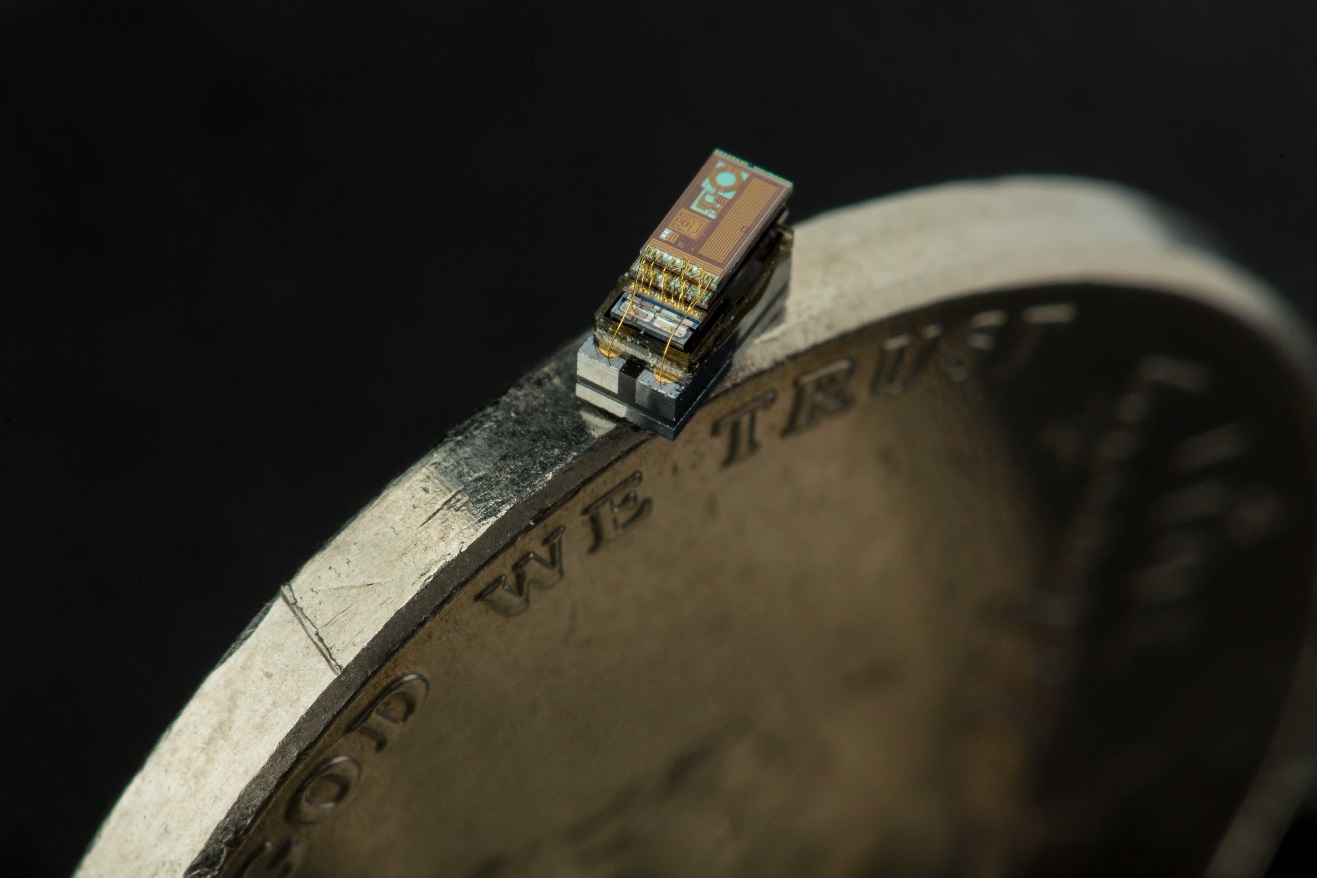
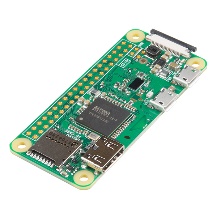
Tiny embedded IoT device
IoT / Embedded

What does all this mean?

  • Chips are getting bigger and harder to design
  • Hierarchical design flow
  • Good design principles needed
  • Knowledge of fundamental design practices
  • Ability to develop innovative design techniques
  • This course is the first step
  • Prepares you for VLSI courses
  • Then you may be ready for creating your own start-up

Movellus Circuits logo
Everactive logo
Ambiq Micro logo

Summary

  • We will focus this course on integrated circuits arising from semiconductor devices
  • Specifically digital circuits
  • We will include examples at each step of understanding
  • Our goal is to:
  • Get you familiar with the concepts
  • Internalize the concepts
  • Become proficient in using the concepts
  • Seeing how the concepts can be used for future work
  • You will need to keep up as the material moves fast!

Questions (before review)?

Interactive Apps

Review: Charge, Field, Voltage

  • Charge: a property of matter that creates electric forces; like charges repel and opposite charges attract.
  • Electric field: force per unit charge; it points in the direction a positive test charge would accelerate.
  • Voltage (electric potential): energy per unit charge; voltage differences drive current.

Review: Coulomb

  • Coulomb's law: electric force between charges scales as \( F = \frac{1}{4\pi\epsilon_0}\frac{q_1 q_2}{r^2} \), directed along the line between them.
  • Capacitance: how much charge a structure stores per volt, \( C = \frac{Q}{V} \).
  • Electric fields come from charges and shape how potential changes in space.

Band Energy and Bandgap

  • Band energy diagrams show allowed electron energy bands (valence and conduction) and the bandgap between them.
  • Energy in a solid refers to allowed electron energy levels in a periodic lattice.
  • Solving the Schrodinger equation in a lattice leads to allowed bands and forbidden energy ranges (bandgaps).

Materials and Ambipolar Transport

  • Conductors: overlapping bands or zero bandgap; carriers are abundant.
  • Insulators: large bandgap; very few carriers at room temperature.
  • Semiconductors: moderate bandgap; carrier concentration is tunable (doping, fields, light).
  • Ambipolar transport: current can include both electrons and holes in a semiconductor.
  • We control carrier concentrations by shifting energy levels (biasing, doping, or illumination).